 Irishman Gifts
How to Clean Articulated Resin Dragons Safely
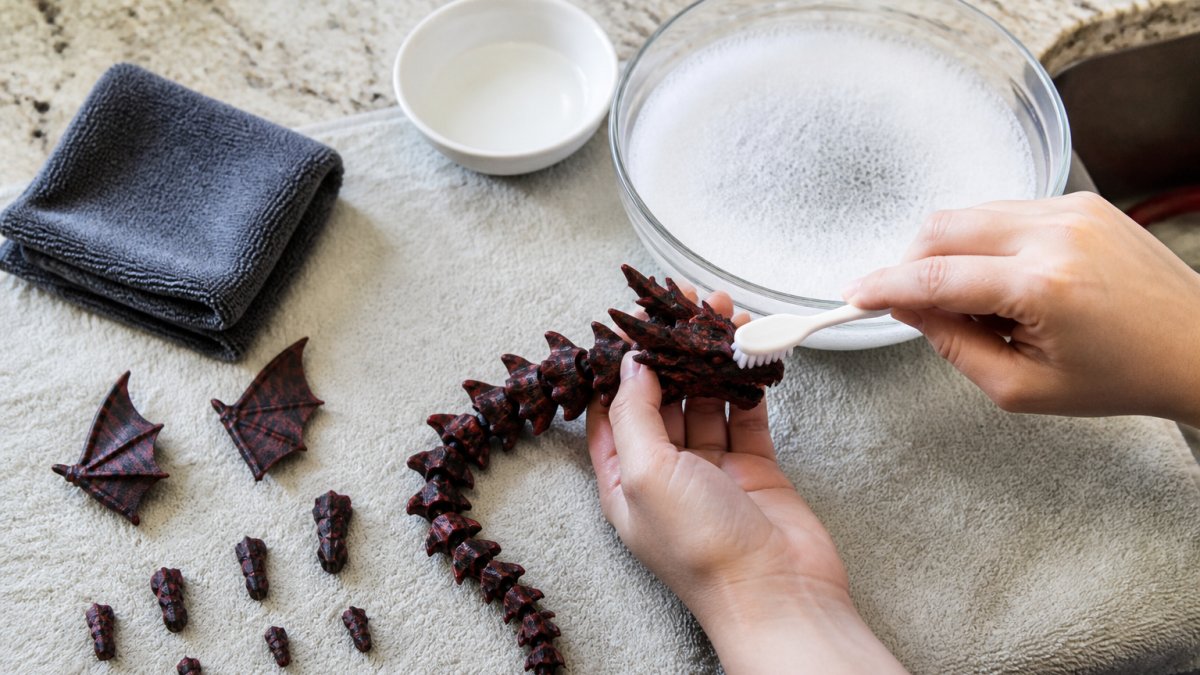
Table of Contents
- Why Articulated Resin Dragons Need Special Care
- Resin Print Cleaning Tools You Actually Need
- Resin-Safe Cleaning Methods for Dust and Debris
- Step-by-Step: Cleaning Articulated Dragon Joints
- Cleaning Uncured Resin vs. a Finished, Cured Dragon
- Fixing Sticky, Stiff, or Fused Joints After Curing
- Conclusion
- Frequently Asked Questions
Last Updated: October 10, 2026
Why Articulated Resin Dragons Need Special Care
An articulated resin dragon is a 3D-printed figure made from liquid resin that hardens under UV light, with joints designed to move without coming apart. That construction is exactly why it needs special care: resin is harder and smoother than common filament plastics, but it chips, and every joint is a thin, load-bearing hinge.
At Irishman Gifts, we finish each dragon by hand, so we know where these models are fragile. Dust settles into the gaps between segments. Finger oils dull the surface. And a joint pushed past its limit can crack instead of flex.
Below, we'll show you exactly how to clean articulated resin dragons without loosening a single joint.
Most guides treat these figures like any plastic toy. That's the first mistake.
Resin Print Cleaning Tools You Actually Need
You need very little to clean a resin print safely: a soft brush, a microfiber cloth, and a can of compressed air cover most jobs. Add mild soap and warm water for a deeper clean. Skip anything abrasive.
Here's what belongs in your kit:
- Soft brush - a makeup brush or soft paintbrush for dust
- Microfiber cloth - for wiping without scratches
- Compressed air - for hard-to-reach areas
- Mild soap - dish soap without harsh additives
- Warm water - never hot
- Paper towels - for drying and blotting
What most guides miss is the resin residue problem. Fresh prints carry uncured resin on the surface, and that calls for gloves and ventilation, not a household rag.
Resin-Safe Cleaning Methods for Dust and Debris
Start with dry methods before you touch water. Dust and loose debris come off with air and a soft brush, and dry cleaning avoids moisture near the joints.
Work in this order:
- Blast compressed air into the gaps between segments.
- Brush the body with gentle strokes, following the scale direction.
- Wipe the flat surfaces with a dry microfiber cloth.
For a deeper clean, mix a few drops of mild soap into warm water. Dampen a soft cloth, wipe the surface, and rinse with a clean damp cloth. Never soak the figure.
A common mistake is scrubbing sticky joints. That grinds dust deeper into the hinge. Gentle wiping wins every time.
Step-by-Step: Cleaning Articulated Dragon Joints
Cleaning articulated dragon joints takes about ten minutes and one rule: support the joint while you clean it. Hold the two segments steady with your finger and thumb, then work the brush into the gap. The reason is mechanical. Most articulated dragons use either a printed pin hinge (a small cylinder riding inside a socket) or a ball-and-socket joint (a sphere seated in a cup). Both rely on a thin clearance gap of a few thousandths of an inch. That gap is where dust packs in, and it is also where a sideways push will shear the pin or crack the socket wall.
Before you start, identify which joint type you are working on. Pin hinges usually sit at the neck, tail, and wing roots and only rotate on one axis. Ball-and-socket joints sit at shoulders and hips and rotate on multiple axes. Pin hinges tolerate less lateral force; ball-and-socket joints tolerate less pulling force. Adjust your grip accordingly.
Follow these steps:
- Support the joint. Pinch both segments so the hinge doesn't take the pressure. For a pin hinge, grip along the axis of rotation. For a ball-and-socket, cup the socket from behind.
- Brush the gap. Use short strokes with a soft brush, working parallel to the joint line, not across it. A makeup brush or soft paintbrush reaches into the clearance without prying it open.
- Blow out the loosened dust. Compressed air, held a few inches away, at a shallow angle so you push debris out rather than deeper in.
- Wipe the joint line. A damp cloth, not a soaked one. Wring it until it stops dripping. Water that pools in the gap can carry dust back into the hinge and leave mineral spots as it dries.
- Dry thoroughly. Air dry, then blot any remaining moisture with a paper towel corner twisted into a point.
- Test the movement. Flex each joint once, gently, through its normal range only.
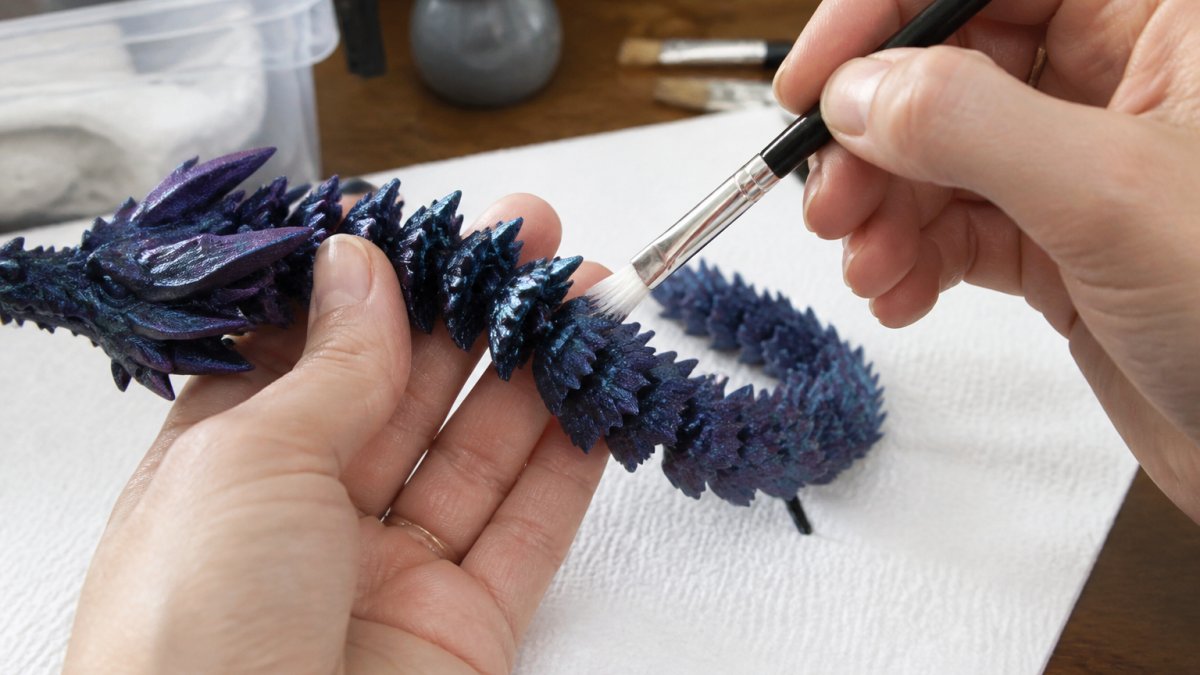
Handle every joint within its limits. If it stops moving, stop pushing. Forcing articulation is how fused joints become broken joints. A useful test: if you feel resistance before the joint reaches the end of its normal travel, debris or resin is binding it, and the fix is cleaning, not force.
For joints that are visibly packed with dust but still move freely, a dry-only pass is enough. Save the damp cloth for joints that feel gritty or look dull. And never separate a joint to clean it unless the maker designed it to come apart. Most articulated resin dragons are printed in place, and pulling a pin out of its socket will crack the socket wall rather than free the pin.
If a joint feels gritty after cleaning, repeat the brush-and-blow steps once. If it still feels gritty, the debris is likely resin residue rather than dust, and the fix is more curing, not more scrubbing. See the troubleshooting section below.
Cleaning Uncured Resin vs. a Finished, Cured Dragon
These are two different jobs, and mixing them up causes real problems. Uncured resin is a skin irritant and a chemical hazard. A finished, cured dragon is a safe display piece that only needs dusting.
Uncured resin cleanup happens right after printing:
- Wear nitrile gloves and eye protection
- Work in a ventilated space, away from living areas
- Wipe tools and the build plate with paper towels
- Dispose of contaminated towels and wash liquid as chemical waste, not down the sink
Finished dragon care is simple:
- Dust with a soft brush or microfiber cloth
- Deep clean occasionally with mild soap and water
- Dry thoroughly after any contact with water
The EPA guidance on hazardous waste disposal explains why uncured resin wash liquid never goes down a drain. Once a print is fully cured, that risk is gone.
Fixing Sticky, Stiff, or Fused Joints After Curing
Sticky, stiff, or fused joints usually come from three causes: under-curing, resin residue left in the hinge, or paint that ran into the gap. Each has a fix, and none of them involve force. Understanding the mechanism matters, because the wrong fix makes the problem worse.
Sticky joints mean the surface never fully cured. Uncured resin stays tacky and attracts dust, which then packs into the hinge. The fix is more UV exposure, not more cleaning. Set the figure in direct sunlight for 10 to 15 minutes, rotating it so the joints catch the light, or under a UV lamp for 2 to 5 minutes per side. Re-test the surface with a gloved fingertip. If it still feels tacky, repeat. Do not wash a sticky joint first. Water and soap will not cure resin, and moisture trapped in the gap can slow the cure.
Stiff joints often just need movement. Flex them gently, a few degrees at a time, until they loosen. Work through the joint's normal range only. A common pattern is that a joint stiffens because a thin film of resin bridged the clearance gap during curing. Repeated gentle flexing breaks that film without stressing the pin. Expect it to take several sessions over a day or two, not one hard push.
Fused joints are the hard case. A layer of resin has bonded two segments. Work the joint line with a soft brush and warm soapy water first, using a brush small enough to reach into the gap without prying it. If it stays fused, gentle flexing over several days often frees it. If it still will not move, stop. A fused joint that resists gentle flexing is usually bonded across the full pin, and forcing it will crack the socket wall rather than free the pin. At that point, the safe options are to display the figure as-is or contact the maker about a repair.
A note on material: this guidance applies to cured resin prints. If your dragon is PLA or another filament plastic, heat is the usual cause of stiff joints, and a short warm-water soak can help. Resin does not respond the same way. Heat softens cured resin and can deform the joint permanently, so keep resin dragons out of hot cars and away from hair dryers and heat guns.
What nobody tells you is that prevention beats repair. Store your dragon out of direct sun, dust it monthly, and never leave it in a hot car. Heat softens resin, and soft resin deforms at the joints. A closed display case or a lidded box with a soft cloth liner cuts dust buildup dramatically and reduces how often you need to clean at all.
Conclusion
Keeping a resin dragon clean and movable comes down to patience: gentle tools, dry methods first, and joints that never get forced. Done right, a hand-finished piece stays crisp and articulated for years.
Every dragon from Irishman Gifts is printed, cured, and finished by hand in small batches, with designs retired after 20-30 pieces so your figure stays one of a kind. We inspect each piece before it ships, and orders of $35 or more ship free within the US.
Shop the collection and find a dragon built to be handled, not just displayed.
Frequently Asked Questions
How do you clean an articulated resin dragon?
Start by removing loose dust with compressed air or a soft brush. For deeper cleaning, wipe the surface with a damp microfiber cloth and a drop of mild soap, then dry thoroughly. Clean between the joints with a soft brush, never forcing movement. Avoid alcohol and abrasive cleaners, which can dull the finish or weaken resin.
Can you wash a resin 3D print with water?
Yes, a finished and fully cured resin print can be washed with warm water and mild soap. The key is to dry it completely afterward, especially around the joints, so moisture does not sit in the crevices. Never soak an articulated dragon for long periods, and never wash an uncured print this way.
Can alcohol damage a resin dragon?
Isopropyl alcohol is used to wash uncured resin off fresh prints, but it can dull or damage a finished, painted surface. On a cured dragon with paint or a clear coat, alcohol can strip the finish and leave white marks. Stick to mild soap and water for routine cleaning of finished pieces.
How do you clean dust out of small articulated joints?
Use compressed air on a low setting to blow dust out of the gaps, then work a soft-bristled brush into the joints with light pressure. A dry microfiber cloth can pick up remaining dust from the surface. Never pull or separate the joints to reach inside, as this can crack the resin.
Frequently asked questions
How do you clean an articulated resin dragon?
Start by removing loose dust with compressed air or a soft brush. For deeper cleaning, wipe the surface with a damp microfiber cloth and a drop of mild soap, then dry thoroughly. Clean between the joints with a soft brush, never forcing movement. Avoid alcohol and abrasive cleaners, which can dull the finish or weaken resin.
Can you wash a resin 3D print with water?
Yes, a finished and fully cured resin print can be washed with warm water and mild soap. The key is to dry it completely afterward, especially around the joints, so moisture does not sit in the crevices. Never soak an articulated dragon for long periods, and never wash an uncured print this way.
Can alcohol damage a resin dragon?
Isopropyl alcohol is used to wash uncured resin off fresh prints, but it can dull or damage a finished, painted surface. On a cured dragon with paint or a clear coat, alcohol can strip the finish and leave white marks. Stick to mild soap and water for routine cleaning of finished pieces.
How do you clean dust out of small articulated joints?
Use compressed air on a low setting to blow dust out of the gaps, then work a soft-bristled brush into the joints with light pressure. A dry microfiber cloth can pick up remaining dust from the surface. Never pull or separate the joints to reach inside, as this can crack the resin.