 Irishman Gifts
Unique Resin Art for Home Decor: 2026 Guide
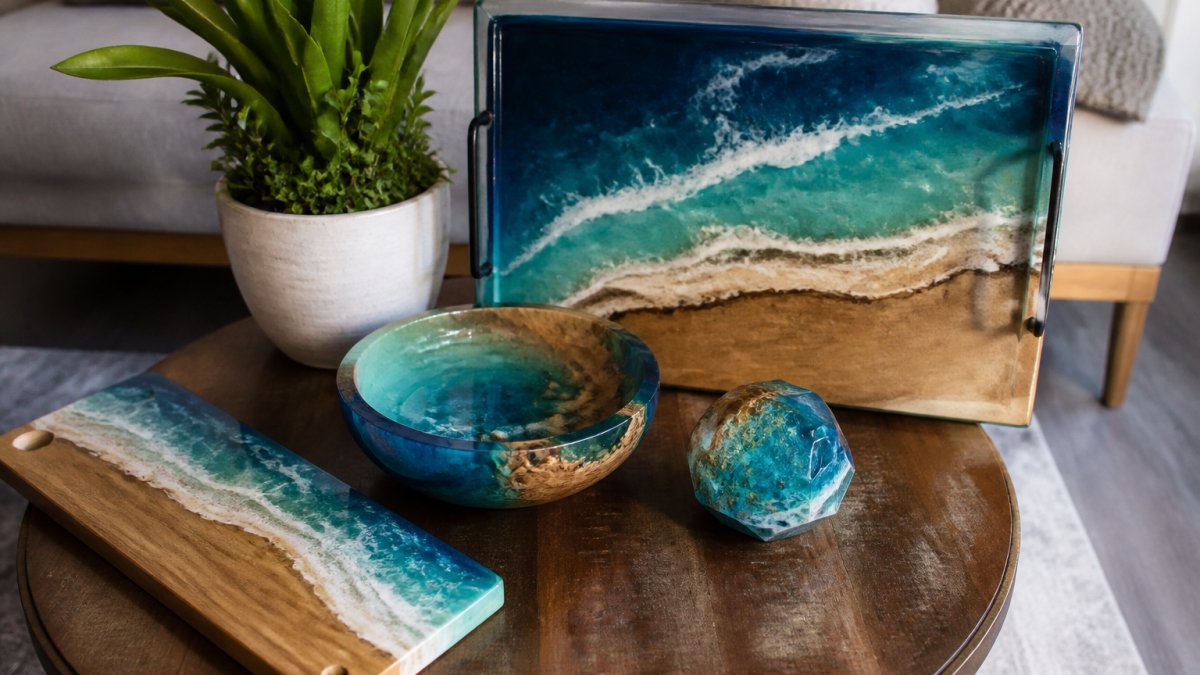
Table of Contents
- Why Unique Resin Art Belongs in Every Home
- Epoxy Resin Home Decor: From Wall Art to Coffee Tables
- Resin Wall Art: Room-by-Room Placement Guide
- Resin Serving Trays That Double as Decor
- How to Care for Resin Art: Cleaning, Durability, and Repairs
- Matching Resin Art to Your Interior Style and Color Palette
- Safety, Sourcing, and What to Ask Before You Buy
- Frequently Asked Questions
Last Updated: October 8, 2026
Why Unique Resin Art Belongs in Every Home
Unique resin art for home decor is artwork and functional pieces made by pouring, layering, and finishing epoxy resin, often combined with wood, pigment, or embedded objects. Unlike mass-produced accents, each piece carries its own color movement and depth. At Irishman Gifts, we make every piece by hand, so no two look alike.
A resin piece gives a room something no showroom can duplicate: a deep-pour river table, a coaster set, or a wall panel each holds its own pattern of color and light.
Epoxy Resin Home Decor: From Wall Art to Coffee Tables
Epoxy resin home decor spans large furniture to small tabletop pieces, because the material can be poured thick for depth or thin for a glossy finish.
Resin Coffee Tables and Decorative Furniture
A resin coffee table is often the centerpiece of a room: makers combine resin with natural wood, letting it fill the gaps into a river or ocean effect, furniture that doubles as sculpture.
The wood matters as much as the resin: a stable, well-dried slab holds up, while a green one can shift over time, so ask how the wood was prepared before you commit.

Coasters, Keepsakes, and Tabletop Accents
Smaller pieces are the easiest entry point. Coasters, trays, and keepsakes let you test how resin fits your home before investing in furniture.
Start with a coaster set that matches your living room palette. If you love how it looks and wears, move up to a larger piece.
Resin Wall Art: Room-by-Room Placement Guide
Placement decides whether resin wall art looks considered or like an afterthought. Treat resin like a painting, but give it light, because the surface reflects and shifts with it.
| Room | Best Placement | Why It Works |
|---|---|---|
| Living room | Above the sofa or a console | Anchors the seating area |
| Bedroom | Opposite or beside the bed | Soft reflection, calm mood |
| Entryway | On a narrow wall | Greets guests, adds color |
| Home office | Behind the desk | Adds depth on video calls |
Living Spaces and Bedroom Decor
In living spaces, a large resin panel above the sofa can replace a mirror or print. In the bedroom, choose softer tones and mid-size formats; a bold piece opposite the bed feels heavy.
Bedroom decor benefits from pieces that catch morning light: a resin panel with translucent layers glows at sunrise and deepens at night.
Resin Serving Trays That Double as Decor
Resin serving trays earn their keep twice: they carry drinks and appetizers, then sit on a console or coffee table as decor, one of the most practical ways to bring resin into a home.
A few things separate a tray that lasts from one that disappoints:
- A level, fully cured surface with no soft spots
- Handles or a raised edge that make carrying safe
- A finish that resists scratching from glassware and keys
- A size that fits your table without crowding it
For gifts, a tray is hard to beat: it suits housewarmings, weddings, and holidays, and works in almost any home style.
How to Care for Resin Art: Cleaning, Durability, and Repairs
Knowing how to care for resin art comes down to three habits: clean gently, avoid heat, and keep it out of harsh sunlight.
Cleaning is simple. Wipe with a soft, damp cloth and a mild soap if needed. Avoid abrasive pads and solvents, which dull the surface. For dust, a dry microfiber cloth is enough.
Durability depends on the pour and the cure. A properly cured piece is hard and resilient; a rushed one can stay tacky or develop soft spots.
Repairs are limited: light scratches can sometimes be buffed out, but deep cracks or cloudy patches need a maker's hand. If a piece arrives damaged, contact the maker before fixing it yourself.
Matching Resin Art to Your Interior Style and Color Palette
Matching resin art to your space starts with your existing palette, not the artwork. Pull two or three colors from your room, then find a piece that echoes them, the step most buyers skip.
A quick framework:
- Neutral rooms: a resin piece with one bold color becomes the focal point.
- Colorful rooms: choose a piece with a quieter, tonal palette so it complements rather than competes.
- Natural, wood-heavy rooms: lean into nature-inspired designs with earth tones and organic forms.
- Modern, minimal rooms: a single clean shape with a deep, glossy finish fits best.
For a cohesive look, repeat one color from the art elsewhere in the room, such as a cushion or vase.
Style-by-Style Pairings That Actually Work
Modern and contemporary. Clean lines, low clutter, and a tight palette of white, gray, black, and one accent. A resin piece with a single sweeping color, deep teal, charcoal, or oxblood, reads as intentional; avoid busy multi-color pours.
Rustic and farmhouse. Warm woods, linen, and muted greens or rust.
Coastal. Whites, sand, soft blues, and driftwood tones. Ocean-effect resin, layered blues and whites with a translucent top, is the obvious choice, but the trick is restraint: one coastal piece per room, not three.
Minimalist. Few objects, lots of negative space, and two or three neutrals. A single small resin piece, a coaster set, a narrow wall panel, carries more weight here than a large one.
Scale and Placement Math
Wall art: aim for the piece to span roughly two-thirds to three-quarters of the width of the furniture below it. Above a 72-inch sofa, that means a 48-to-54-inch panel.
Hang height: the center of the artwork should sit at roughly 57 to 60 inches from the floor, the same eye-level line galleries use.
Tabletop pieces: a tray or centerpiece should take up no more than about one-third of the table's surface, on a 48-inch dining table, roughly 16 inches across.
Furniture: a coffee table should leave 14 to 18 inches of walking space on every open side. A river table that fits the room's footprint beats a larger one people must sidestep.
Reading Light Before You Commit
Resin shifts with light more than almost any other decor material, so the same piece can look different at 8 a.m. and 8 p.m. Note the light where it will hang: a north-facing wall stays cool and even, a south-facing wall gets direct sun that can yellow some resins, and a lamp-lit corner deepens color. If the wall gets hours of direct afternoon sun, favor a UV-stable topcoat or rotate the piece away from the window, and ask makers which finishes hold color best in bright rooms, before you buy, not after.
Safety, Sourcing, and What to Ask Before You Buy
Safety and sourcing questions separate a confident purchase from a gamble. Resin is safe once fully cured, but making it involves chemicals that require care, ventilation, and time.
Before you buy, ask:
- Is the piece fully cured, and how long did it cure?
- Is the finish food-safe, if it's a tray or coaster?
- What wood or materials are combined with the resin?
- How should it be cleaned and stored?
- What is the return or repair policy?
A maker who answers these clearly stands behind their work; vague answers are a signal.
What Resin Pieces Actually Cost
Pricing in this category is inconsistent online. Pricing depends on quantity, dates, and delivery. For current prices or a quote, shop the collection.
Two things drive price more than size: the wood (a kiln-dried walnut slab costs far more than pine) and the cure schedule (a deep pour can take days to weeks to harden, tying up the maker's shop).
Quality Indicators to Check Before You Pay
You do not need to be a resin artist to spot a well-made piece. Look for these signals.
Surface clarity. A good pour is clear and free of cloudiness, fish-eyes, or trapped bubbles.
Wood preparation. Ask whether the wood was kiln-dried or air-dried and how long it was seasoned.
Finish and feel. Run a finger along the surface. It should feel hard and smooth, not tacky.
UV stability. Ask whether the resin resists yellowing. All epoxy shifts slightly over years, but a UV-stable topcoat slows it noticeably, especially in bright rooms.
Documentation. A maker who can tell you the resin brand, wood species, and cure time knows their material.
Safety and Environmental Considerations
If you are buying, the safety story is mostly about the maker's process. If you are considering a DIY project, it is about yours.
For buyers: cured resin is inert and safe for normal household use. Food-contact pieces, trays, coasters, charcuterie boards, should use a finish the maker explicitly rates as food-safe.
For DIY makers: uncured epoxy requires ventilation, nitrile gloves, and eye protection. Work with cross-ventilation or a fan moving air away from you, and follow the manufacturer's mix ratio exactly, off-ratio batches may never fully cure.
For the room: give a newly finished piece a few days in a well-ventilated space before placing it in a bedroom or small room. The smell fades as the cure completes.
We retire each design after a small run, so the piece you buy won't show up on every shelf in your neighborhood. You can see current pieces and how they're made at the American Craft Council on handmade goods, where the value of small-batch, hand-finished work is well documented.
Frequently Asked Questions
What kinds of resin art work well as home decor?
Resin wall art, serving trays, coasters, and small furniture pieces like side tables are the most popular choices. Wall art suits living rooms and bedrooms, while trays and coasters add functional accents to kitchens and dining areas. Deep-pour pieces with embedded wood or crystals create focal points, and smaller items like keepsake dishes fit shelves or entryway consoles.
How do you care for handmade resin decor?
Dust resin art with a soft, dry cloth or a slightly damp microfiber towel. Avoid alcohol-based cleaners, acetone, and abrasive sponges, which can dull the surface. Keep pieces out of direct sunlight for long periods to prevent yellowing, and use coasters under hot mugs. For serving trays, hand wash with mild soap and warm water, then dry immediately.
Are resin serving trays suitable for everyday use?
Yes, food-safe epoxy resin trays are suitable for everyday use when the maker confirms the resin is fully cured and rated for food contact. They work well for carrying drinks, snacks, and breakfast in bed. Avoid cutting directly on the surface and never place them in a dishwasher or microwave, since heat can soften or warp the resin.
How can I tell if resin art is truly handmade and not mass-produced?
Look for small-batch signals: slight variations between pieces, hand-mixed color swirls, and visible finishing marks on edges. Ask the maker how many of each design they produce and whether colors are mixed by hand. Studios that retire designs after a limited run and finish each piece individually typically produce genuine one-of-a-kind work rather than imported copies.
Resin art rewards buyers who ask the right questions and care for what they bring home. If you want a piece that is genuinely one-of-a-kind, hand-finished, and made in small batches, Irishman Gifts is built for exactly that. Every item is finished by hand, designs are retired after a limited run, and orders of $35 or more ship free within the US. Shop the collection and bring home a piece no one else has.
Frequently asked questions
What kinds of resin art work well as home decor?
Resin wall art, serving trays, coasters, and small furniture pieces like side tables are the most popular choices. Wall art suits living rooms and bedrooms, while trays and coasters add functional accents to kitchens and dining areas. Deep-pour pieces with embedded wood or crystals create focal points, and smaller items like keepsake dishes fit shelves or entryway consoles.
How do you care for handmade resin decor?
Dust resin art with a soft, dry cloth or a slightly damp microfiber towel. Avoid alcohol-based cleaners, acetone, and abrasive sponges, which can dull the surface. Keep pieces out of direct sunlight for long periods to prevent yellowing, and use coasters under hot mugs. For serving trays, hand wash with mild soap and warm water, then dry immediately.
Are resin serving trays suitable for everyday use?
Yes, food-safe epoxy resin trays are suitable for everyday use when the maker confirms the resin is fully cured and rated for food contact. They work well for carrying drinks, snacks, and breakfast in bed. Avoid cutting directly on the surface and never place them in a dishwasher or microwave, since heat can soften or warp the resin.
How can I tell if resin art is truly handmade and not mass-produced?
Look for small-batch signals: slight variations between pieces, hand-mixed color swirls, and visible finishing marks on edges. Ask the maker how many of each design they produce and whether colors are mixed by hand. Studios that retire designs after a limited run and finish each piece individually typically produce genuine one-of-a-kind work rather than imported copies.