 Irishman Gifts
Why Artisanal 3D Prints Cost More: Real Cost Breakdown
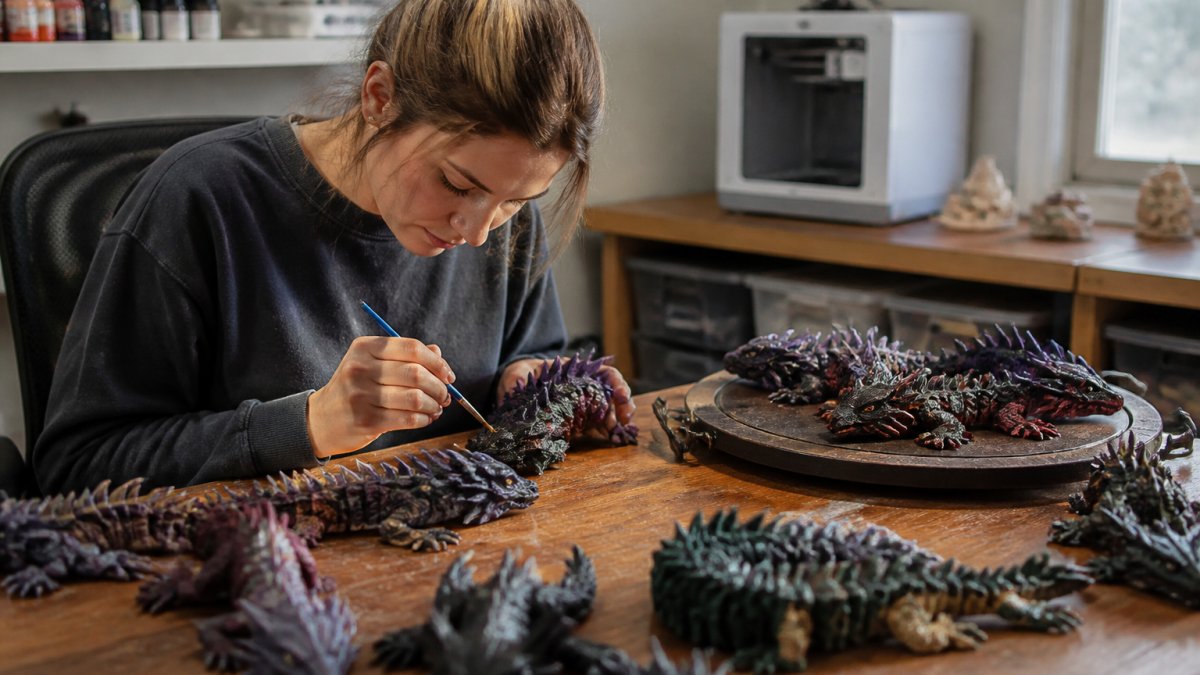
Table of Contents
- Why Artisanal 3D Prints Cost More Than Mass-Produced Items
- The Main 3D Printing Cost Factors That Drive Up Price
- Resin 3D Printing Cost: Why Detail Comes at a Premium
- 3D Print Post-Processing: The Hidden Labor Behind Every Piece
- A Transparent Price Breakdown for a Finished Artisanal Print
- Buying Custom 3D Printed Gifts Online: How to Judge Value
- Frequently Asked Questions
Last Updated: October 16, 2026
Why Artisanal 3D Prints Cost More Than Mass-Produced Items
Artisanal 3D prints cost more because each piece carries real machine time, hand labor, and design work that mass production spreads across thousands of units. At Irishman Gifts, we make every piece this way, here is where the money goes.
A mass-produced figurine pops out of a factory mold in seconds. A hand-finished resin dragon takes hours of printing, curing, sanding, and inspection. That gap explains most of the price difference.
The Main 3D Printing Cost Factors That Drive Up Price
Four costs separate a cheap print from a finished artisanal piece: material, machine time, labor, and waste. Small studios face all four at full price; factories spread them across huge volumes:
- Material - filament or resin sold by the kilogram
- Machine time - hours your printer runs per item
- Labor - design, setup, finishing, and inspection
Material Costs: Filament and Resin Prices Per Kilogram
Filament and resin are the raw material cost, and only the starting point. Standard PLA is cheapest; specialty and engineering filaments cost more per kilogram, and resin costs more than most filaments. Material choice also affects how the finished piece looks and feels.
- PLA filament - cheap, easy to print, good for prototypes
- PETG and ABS - tougher, better for functional parts
- Standard resin - smooth surface, fine detail
Size drives cost fast: a thumb-sized figurine and a coffee-mug-sized one do not cost the same to make.
Machine Time, Print Time, and Equipment Costs
Print time is the silent cost most buyers never see: a printer runs for hours on one detailed model and cannot print anything else meanwhile. It depends on three things:
- Size - bigger prints take longer
- Layer height - finer layers mean more passes
- Detail and supports - complex shapes need extra material and time
Equipment matters too. Printers wear out, nozzles clog, screens fail, belts stretch, so every studio budgets for parts and maintenance.
Resin 3D Printing Cost: Why Detail Comes at a Premium
Resin 3D printing costs more than filament printing because resin captures fine detail that filament cannot match. The trade-off is price, handling, and cleanup. For figurines, miniatures, and decorative pieces, that detail is the whole point.
Resin also needs washing and curing after printing, adding time, equipment, and labor to every piece.
Resin vs. Filament: Cost Per Print Compared
| Factor | Filament (FDM) | Resin (SLA/DLP) |
|---|---|---|
| Material cost | Lower | Higher |
| Detail level | Good | Excellent |
| Surface finish | Visible layer lines | Smooth |
| Post-processing | Light sanding | Wash, cure, sand |
| Best for | Functional parts | Figurines, minis |
For a smooth, detailed display piece, resin wins. For a tough bracket or quick prototype, filament is the practical pick.
Support Material, Failed Prints, and Material Waste
Failed prints are a real cost, and small studios eat it so you do not have to. A print can fail hours in, wasting material, machine time, and electricity, the studio still pays for all of it. Support material adds more: complex shapes need supports for overhangs, and those get removed and thrown away, so you pay for material that never ends up in the final piece.
3D Print Post-Processing: The Hidden Labor Behind Every Piece
Post-processing is where artisanal prints earn their price. Printing is only the first step; sanding, curing, and hand-finishing turn a rough print into a finished piece, the labor most buyers never see.
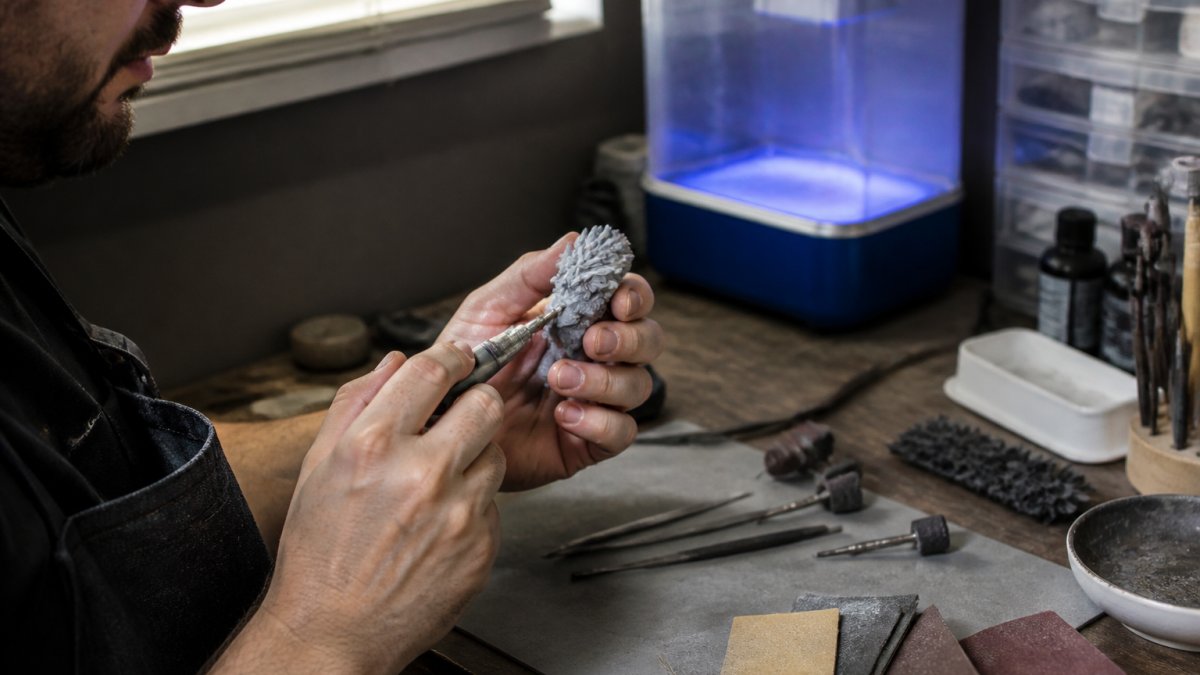
Sanding, Curing, and Hand-Finishing Standards
Hand-finishing follows a set process at a good studio, skip a step and the finished piece shows it. A typical sequence:
- Wash the print to remove uncured resin
- Cure it under UV light
- Remove support marks
Resin prints need washing and curing first, skip curing and the resin stays soft and unsafe to handle. Sanding smooths the surface and removes support scars; inspection catches flaws before shipping.
Quality Control and Design Customization Labor
Quality control and custom design are two costs mass production avoids entirely. A factory runs one design millions of times; a small studio adjusts designs, checks each piece, and rejects anything below standard.
Custom work adds design time. A specific name, shape, or detail means someone has to build or adjust that design in CAD software, skilled labor that takes time.
A Transparent Price Breakdown for a Finished Artisanal Print
Most cost articles stop at 'materials are cheap, labor is expensive', true but useless when you are staring at a price tag.
| Cost Bucket | What It Covers | Typical Range (USD) | Share of Retail |
|---|---|---|---|
| Material | Resin, supports, IPA, gloves, paint | $4 - $9 | 5% - 9% |
| Machine time | 6 - 14 hours of printer runtime, electricity, wear | $6 - $14 | 6% - 14% |
| Design and file prep | CAD modeling, slicing, test prints, revisions | $10 - $30 | 10% - 30% |
| Post-processing labor | Wash, cure, support removal, sanding, priming, painting | $25 - $55 | 25% - 55% |
| Quality control | Inspection, rejected pieces, rework | $3 - $8 | 3% - 8% |
| Packaging and shipping | Box, padding, label, postage | $6 - $12 | 6% - 12% |
| Overhead | Studio rent, software subscriptions, insurance, tools | $5 - $12 | 5% - 12% |
| Profit margin | Reinvestment, owner pay, growth | $10 - $25 | 10% - 25% |
Add those ranges up and you land between roughly $70 and $165. A studio pricing at $95 is not gouging, it is running a thin margin once you account for the hours that never show up on an invoice.
Why Material Is the Smallest Line Item
Buyers anchor on material cost because it is the only input they can see. A 1 kg bottle of standard resin runs roughly $25 - $45, and a 1 kg spool of PLA roughly $18 - $30. A 6-inch figure might use 80 - 150 grams of resin, so raw material is often under $6, small next to a price tag, until you remember the bottle does not sand, cure, or paint itself.
Why Post-Processing Is Usually the Largest Line Item
Hand-finishing is where the hours pile up. A typical sequence for one resin piece:
- Wash in IPA: 5 - 10 minutes
- UV cure: 5 - 15 minutes
- Support removal and cleanup: 10 - 20 minutes
That is easily 2 - 5 hours of hands-on time for one piece. At a modest $15 - $25 per hour, well below what a skilled painter or modeler commands, you are already at $30 - $125 in labor before the printer turns on.
Why the Same Design Can Cost $40 or $140
Two studios can print the identical file and land on wildly different prices. The variables that move the number most:
- Finish level, raw print vs. sanded vs. fully painted
- Design origin, stock file vs. custom CAD work
- Batch size, one-off vs. a short run of 10
- Turnaround, standard queue vs. rush
- Rejection rate, how many pieces get retired per design
A raw, unpainted print from a stock file can legitimately sell for $30 - $50. The same model, custom-modeled, hand-painted, and inspected, can justify $120 - $180. Neither price is wrong, they are different products wearing the same shape.
What a Fair Markup Actually Looks Like
A common pattern among small studios is a 2.5x to 4x multiplier on direct costs (material + machine time + direct labor). Below 2x, the studio is usually subsidizing the buyer with unpaid hours.
If a studio will not tell you roughly where their price sits on that scale, treat it as a yellow flag, not proof of a bad deal, but a sign they have not thought carefully about their numbers.
Buying Custom 3D Printed Gifts Online: How to Judge Value
Judging value in custom 3D printed gifts online comes down to one question: what are you actually buying that a mass-produced alternative does not give you?
A low price usually means less finishing, less inspection, faster shortcuts, and a design run thousands of times. A higher price can mean more hand labor, tighter quality control, and a piece built to last.
Artisanal vs. Mass-Produced: A Side-by-Side Framework
| Dimension | Mass-Produced Print | Artisanal Small-Batch Print |
|---|---|---|
| Production volume | Thousands per design | Often 1 - 50 per design |
| Customization | None, or limited color choice | Names, poses, sizes, one-offs |
| Finish | Raw or lightly cleaned | Sanded, primed, painted, sealed |
| Quality control | Statistical sampling | Piece-by-piece inspection |
| Materials | Cheapest that pass spec | Chosen for finish and durability |
| Design origin | Licensed or in-house mass file | Original or commissioned CAD |
| Turnaround | Days from a warehouse | Days to weeks from a studio |
| Replacement parts | Often none | Usually available on request |
| Price band | $5 - $30 | $40 - $200+ |
| Best for | Party favors, bulk gifts | Keepsakes, display pieces, gifts with meaning |
Neither column is 'better.' They solve different problems. The mistake is paying artisanal prices for a mass-produced experience, or expecting artisanal quality at a mass-produced price.
A Buyer Checklist for Assessing Artisanal Quality
Use this checklist before ordering from any small-batch studio:
- Real photos, not renders. Renders hide layer lines, support scars, and paint flaws. Ask for a photo of a finished piece from a recent order.
- Finished by hand or shipped raw? 'Raw' means you are buying a print, not a product. That is fine if the price reflects it.
- Limited or endless design? A design retired after 25 pieces carries more attention per unit than one run 5,000 times.
Questions That Separate a Justified Premium From an Unclear Markup
Ask these directly. The answers tell you more than any product page.
- How many hours of hand-finishing go into one piece? A real answer is a range, not a slogan.
- What is your rejection rate per design? Studios that inspect will know this number.
- Can you show me a piece you retired? Willingness to show flaws is a strong quality signal.
- What happens if it arrives damaged? Clear policy equals confidence.
- Is this design original to you, or licensed? Both are fine, but they justify different prices.
When the Premium Is Not Worth It
Be honest about the use case. If you need 30 identical party favors, artisanal pricing is the wrong tool, you will pay 4x to 8x more for a difference no one will notice.
The real difference between artisanal and mass-produced prints comes down to attention. A factory optimizes for volume. A small studio optimizes for the piece in front of them, and prices it so they can keep doing that.
Frequently Asked Questions
Why are handmade 3D prints more expensive than mass-produced ones?
Artisanal 3D prints cost more because every piece is made individually rather than on an assembly line. A small-batch studio pays for material, machine time, design work, and hours of hand-finishing on each item. Mass production spreads those costs across thousands of units. When a design is retired after 20-30 pieces, none of that setup cost gets absorbed by volume, so the price per piece stays higher.
What factors affect the price of a 3D printed figure?
The biggest 3D printing cost factors are material type and volume, print time, design complexity, support material, and post-processing labor. Resin costs more per kilogram than filament but captures finer detail. A figure with intricate undercuts needs more supports and cleanup. Custom design work, sanding, curing, and quality control add hours that never show up in the raw material bill. Failed prints and waste also get factored into the final price.
How much does it cost to make a resin 3D print?
Resin 3D printing cost depends on the model's volume, resin type, and how much finishing it needs. Resin is typically priced per kilogram, and a small figurine may use only a fraction of that. The larger expense is often labor: washing, curing, removing supports, sanding, and painting. Because pricing depends on quantity, dates, and delivery, check the website for current quotes based on your specific design.
What should I look for when buying custom 3D printed gifts online?
Look for studios that show real photos of finished pieces, not just renders. Ask how items are finished by hand, whether designs are limited, and what quality control steps are used. A transparent maker will explain material choices, print time, and customization limits upfront. If a listing claims artisanal quality but shows no process photos or studio details, treat the premium price with caution. Compare finishing standards, not just the base price.
Mass-produced items win on price, but they lose on character, durability, and the story behind the piece. At Irishman Gifts, we make small-batch resin, 3D-printed, and laser-engraved items by hand, with designs retired after 20-30 pieces and colors mixed by hand so no two runs match. Every piece is inspected before it ships, and orders of $35 or more ship free within the US. Shop the collection and see the difference hand-finishing makes.
Frequently asked questions
Why are handmade 3D prints more expensive than mass-produced ones?
Artisanal 3D prints cost more because every piece is made individually rather than on an assembly line. A small-batch studio pays for material, machine time, design work, and hours of hand-finishing on each item. Mass production spreads those costs across thousands of units. When a design is retired after 20-30 pieces, none of that setup cost gets absorbed by volume, so the price per piece stays higher.
What factors affect the price of a 3D printed figure?
The biggest 3D printing cost factors are material type and volume, print time, design complexity, support material, and post-processing labor. Resin costs more per kilogram than filament but captures finer detail. A figure with intricate undercuts needs more supports and cleanup. Custom design work, sanding, curing, and quality control add hours that never show up in the raw material bill. Failed prints and waste also get factored into the final price.
How much does it cost to make a resin 3D print?
Resin 3D printing cost depends on the model's volume, resin type, and how much finishing it needs. Resin is typically priced per kilogram, and a small figurine may use only a fraction of that. The larger expense is often labor: washing, curing, removing supports, sanding, and painting. Because pricing depends on quantity, dates, and delivery, check the website for current quotes based on your specific design.
What should I look for when buying custom 3D printed gifts online?
Look for studios that show real photos of finished pieces, not just renders. Ask how items are finished by hand, whether designs are limited, and what quality control steps are used. A transparent maker will explain material choices, print time, and customization limits upfront. If a listing claims artisanal quality but shows no process photos or studio details, treat the premium price with caution. Compare finishing standards, not just the base price.