 Irishman Gifts
Heartlandcraft Alternative for Resin Trays: Top Picks
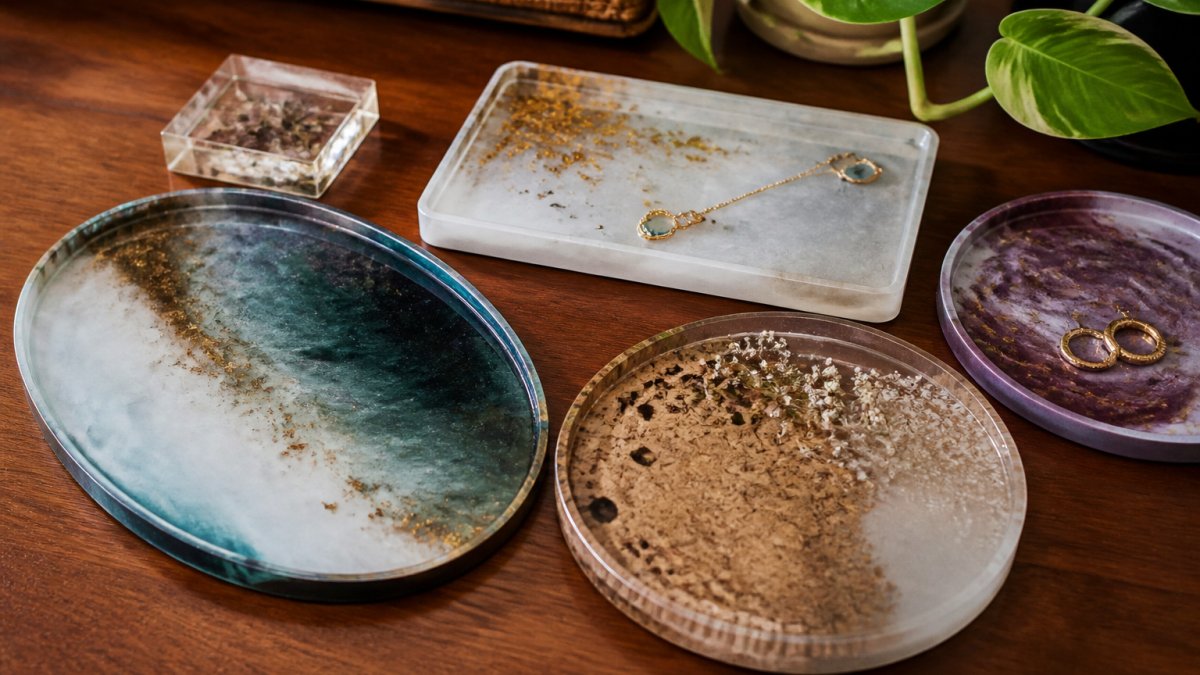
Table of Contents
- Why Look for a Heartlandcraft Alternative for Resin Trays
- Quick Comparison: Resin Tray Options at a Glance
- What to Look for in a Handmade Resin Serving Tray
- Resin Tray Food Safety: What You Need to Know
- Resin Tray Care Instructions for Long-Lasting Use
- Cost Per Tray: Budgeting for Handmade Resin Trays
- How to Make or Decorate a Resin Tray at Home
- Conclusion
- Frequently Asked Questions
Last Updated: October 21, 2026
Why Look for a Heartlandcraft Alternative for Resin Trays
Shoppers searching for a Heartlandcraft alternative for resin trays usually want the same thing: a handmade, food-safe serving piece without the guesswork. At Irishman Gifts, we make small-batch resin trays by hand, so we know exactly which questions matter when you compare makers. Most buyers start with price and stop there. That is a mistake.
The real differences show up in three places: how the tray is finished, whether the maker will confirm food-contact safety, and how many pieces exist in a run. A tray poured in a batch of hundreds and a tray finished one at a time can look similar in a photo. They behave very differently after a year of use.
Below, we break down what separates a good resin tray from a great one and give you a cost and care framework you can apply to any maker you're considering.
Quick Comparison: Resin Tray Options at a Glance
Here is how the main options stack up for anyone weighing a Heartlandcraft alternative for resin trays. This table reflects general material behavior, not a specific maker's claims, so use it as a starting filter.
| Option | Best For | Food Contact | Finish | Watch Out For |
|---|---|---|---|---|
| Small-batch handmade resin tray | Gifts, display, light serving | Ask the maker directly | Hand-polished, glossy | Longer lead times |
| Mass-produced resin tray | Budget decor | Rarely documented | Uniform, factory gloss | Thin edges, generic designs |
| Epoxy coating over wood | Rustic serving boards | Depends on coating | Satin to gloss | Cracking at wood joints |
| Decoupage finish | Decorative trinket trays | Not for food | Matte or satin | Water damage over time |
| UV resin craft trays | Small decorative pieces | Not for food | High gloss | Yellowing in sunlight |
What to Look for in a Handmade Resin Serving Tray
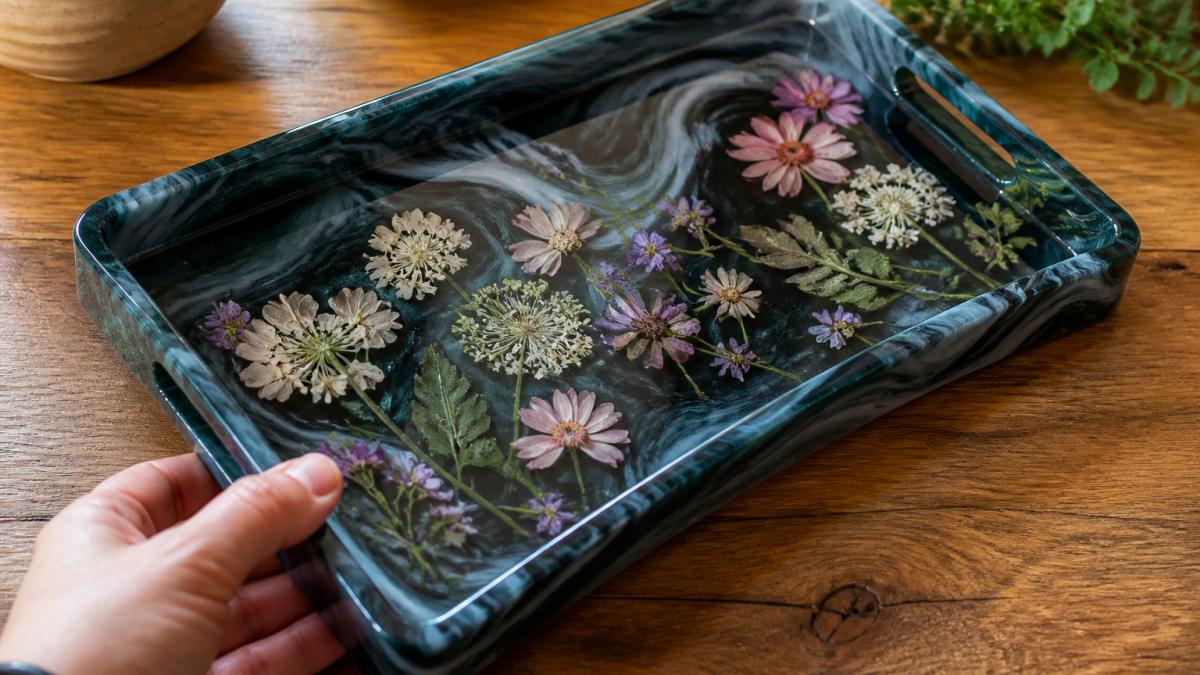
A handmade resin serving tray is a cast piece finished by hand, and the quality signals are visible once you know where to look. Start with the surface. Run your eye along the edge at a low angle. Waviness, bubbles trapped near the rim, or a cloudy patch usually means the pour was rushed or the room was too cold.
Then check the base. A tray that rocks on a flat counter was demolded before it fully cured. That is a manufacturing shortcut, and it rarely shows up in product photos.
Ask the maker three questions before you buy:
- How many of this design were made?
- Is the piece finished by hand or trimmed by machine?
- What is the recommended use, display or food service?
A maker who answers all three quickly is usually a maker who controls the process. At Irishman Gifts, we retire each design after 20 to 30 pieces and mix resin colors by hand, which is why two trays in the same design never match exactly.
Resin Tray Food Safety: What You Need to Know
Resin tray food safety comes down to one word: cure. Fully cured epoxy is generally considered inert, but partially cured resin is not, and no buyer can tell the difference by touch. That is why the U.S. Food and Drug Administration guidance on food-contact materials matters here. The FDA expects food-contact surfaces to be made from materials appropriate for that use, and it does not blanket-approve craft resin.
Suitability also depends on the specific material and its manufacturer's specifications. A coating rated for food contact by its maker is a different product from a general craft resin, and the label is the only reliable source. Ask the maker to name the exact product they poured and whether its manufacturer lists it for food contact.
| Material | Heat Resistance | Water Resistance | Weight | Finish | Everyday Serving Use |
|---|---|---|---|---|---|
| Small-batch cast resin | Moderate; avoid hot pans | High once cured | Moderate | Hand-polished gloss | Light serving with a liner |
| Epoxy over wood | Moderate; joints can crack | High on coated faces | Heavier | Satin to gloss | Rustic boards, dry foods |
| Decoupage finish | Low | Low; water damages paper | Light | Matte or satin | Decorative only |
| UV resin craft tray | Low to moderate | High | Light | High gloss | Decorative only |
Practical rules we follow:
- Treat decorative trays as display pieces, not cutting boards.
- Never put a resin tray in a dishwasher or microwave.
- Avoid direct contact with hot pans and sharp knives.
Resin Tray Care Instructions for Long-Lasting Use
Resin tray care instructions are short, and following them is the difference between a tray that looks new in five years and one that clouds in five months. Wipe with a soft damp cloth and mild dish soap. Dry immediately with a microfiber towel.
Keep the tray out of prolonged direct sunlight. UV exposure dulls the gloss over time, and no home finish is fully immune. Store it flat or upright on edge, never stacked under heavy items.
- Avoid alcohol-based cleaners and acetone.
- Do not scrub with abrasive pads.
- Use coasters under hot mugs.
- Re-polish dull spots with a non-abrasive plastic polish.
Handled this way, a hand-finished tray holds its surface far longer than a factory piece with a thin topcoat.
Cost Per Tray: Budgeting for Handmade Resin Trays
Cost per tray is where most comparisons go wrong. Buyers compare sticker prices and ignore the hidden variables: replacement rate, shipping, and whether the piece is actually one of a kind. A cheap tray you replace twice costs more than a durable one bought once.
| Cost Line | What to Estimate | Why It Matters |
|---|---|---|
| Resin and hardener | Kit price divided by trays per kit | The largest single variable |
| Mold | One-time cost spread across pours | Reusable molds lower cost per tray |
| Colorants and inclusions | Small per-tray add-on | Dried flowers and pigments add up |
| Finish supplies | Sandpaper, polish, gloves | Often forgotten in DIY math |
| Shipping | Total delivered cost | Changes the math on small pieces |
For a handmade piece, the delivered price also reflects labor, design retirement, and batch size, not just materials. Ask each maker for the total delivered cost, including shipping, and compare that number instead of the listing price. Irishman Gifts offers free US shipping on orders of $35 or more, which changes the math on smaller pieces.
How to Make or Decorate a Resin Tray at Home
Making a resin tray at home is a weekend project if you accept one truth up front: curing problems cause almost every failure. Cracks, cloudy patches, and sticky surfaces trace back to mixing ratio, room temperature, or pouring too thick.
What you'll need: a silicone tray mold, epoxy resin and hardener, mixing cups, stir sticks, gloves, a respirator rated for organic vapors, dried flowers or fill material, and a level work surface.
- Warm the room to a steady temperature and level your surface.
- Mix resin and hardener to the exact ratio on the label, stirring slowly for the full recommended time.
- Pour in thin layers, letting each layer partially set before adding the next.
- Place inclusions like flowers or decoupage elements while the layer is still tacky.
- Cover the mold to keep dust out and let it cure undisturbed.
- Demold only after the full cure time, then sand and polish the edges.
Leftover resin is not waste. Pour it into small trinket molds while it is still workable. For safety basics, the Occupational Safety and Health Administration guidance on respiratory protection is a useful starting point before you open a kit indoors.
Conclusion
Comparing a Heartlandcraft alternative for resin trays really comes down to one question: do you want a piece that was made deliberately or one that was made quickly? The finish, the batch size, and the maker's willingness to answer safety questions will tell you more than any product photo.
At Irishman Gifts, we build resin trays in small batches, finish every piece by hand, and retire each design after 20 to 30 pieces. Hand-mixed colors mean your tray is genuinely one of a kind, and free US shipping applies on orders of $35 or more.
If you want a handmade resin serving tray you can actually ask questions about, shop the collection and see what small-batch craftsmanship looks like up close.
Frequently Asked Questions
What are good alternatives to Heartlandcraft resin trays?
Good alternatives include small-batch studios like Irishman Gifts that hand-finish resin trays. Each option differs in durability and cost. For a ready-made tray, look for makers who disclose their resin type and curing process.
What should I look for in a handmade resin serving tray?
Look for smooth, bubble-free surfaces. A handmade resin serving tray from a small-batch studio often includes unique color mixes and embedded elements, but confirm the finish is fully cured and free of tackiness. Also consider size, weight, and care requirements before buying.
Are custom resin trays good gifts?
Yes, custom resin trays make thoughtful gifts because they can be personalized with names, dates, or colors. They suit housewarmings, weddings, and cruise-themed presents. Small-batch makers often retire designs after 20-30 pieces, adding exclusivity. Keep the recipient's style in mind and include care instructions with the gift.
How do I care for a resin serving tray?
Hand wash with mild soap and lukewarm water; avoid dishwashers and harsh chemicals. Dry immediately with a soft cloth to prevent water spots. Keep the tray out of direct sunlight and away from heat sources to avoid yellowing or warping. Use coasters under hot cups and avoid cutting directly on the surface. For stubborn residue, use a soft cloth with diluted vinegar. Store flat or upright to prevent scratches.
Can resin trays be used for food?
If in doubt, use the tray for wrapped items or as a decorative piece.
Frequently asked questions
What are good alternatives to Heartlandcraft resin trays?
Good alternatives include small-batch studios like Irishman Gifts that hand-finish resin trays. Each option differs in durability and cost. For a ready-made tray, look for makers who disclose their resin type and curing process.
What should I look for in a handmade resin serving tray?
Look for smooth, bubble-free surfaces. A handmade resin serving tray from a small-batch studio often includes unique color mixes and embedded elements, but confirm the finish is fully cured and free of tackiness. Also consider size, weight, and care requirements before buying.
Are custom resin trays good gifts?
Yes, custom resin trays make thoughtful gifts because they can be personalized with names, dates, or colors. They suit housewarmings, weddings, and cruise-themed presents. Small-batch makers often retire designs after 20-30 pieces, adding exclusivity. Keep the recipient's style in mind and include care instructions with the gift.
How do I care for a resin serving tray?
Hand wash with mild soap and lukewarm water; avoid dishwashers and harsh chemicals. Dry immediately with a soft cloth to prevent water spots. Keep the tray out of direct sunlight and away from heat sources to avoid yellowing or warping. Use coasters under hot cups and avoid cutting directly on the surface. For stubborn residue, use a soft cloth with diluted vinegar. Store flat or upright to prevent scratches.
Can resin trays be used for food?
If in doubt, use the tray for wrapped items or as a decorative piece.